


Leveraging Partnerships to Navigate Emerging Diabetes Coverage, Access, and Affordability Challenges
This resource was developed in collaboration with Families USA to lift up the emerging challenges people with insulin-requiring diabetes are facing as a result of federal policy shifts impacting availability of affordable health insurance coverage and to identify policy solutions to address those challenges.
Read the full resource here, or keep scrolling to read the key takeaways and watch videos of attendees.
Convening Stakeholders and Supporting Partnerships
In April 2026, CHIR, in collaboration with Families USA, hosted a convening focused on emerging insurance coverage and affordability challenges for people with insulin-requiring diabetes, which includes people living with either type 1 diabetes or type 2 diabetes who require insulin as part of their treatment regimen. The convening brought together a range of perspectives falling into two broad camps:
- Individuals and organizations with deep diabetes expertise, including clinicians, diabetes patient groups, community-based service providers, and people with lived experience.
- Individuals and organizations with broader health care policy and advocacy focus areas, including statewide and national multi-issue health care coalitions or organizations and enrollment assister organizations with a broad population focus.
The goals of the convening were to identify coverage and affordability pain points for people with diabetes and the potential policy solutions best able to address those challenges.
Federal policy changes impacting diabetes coverage
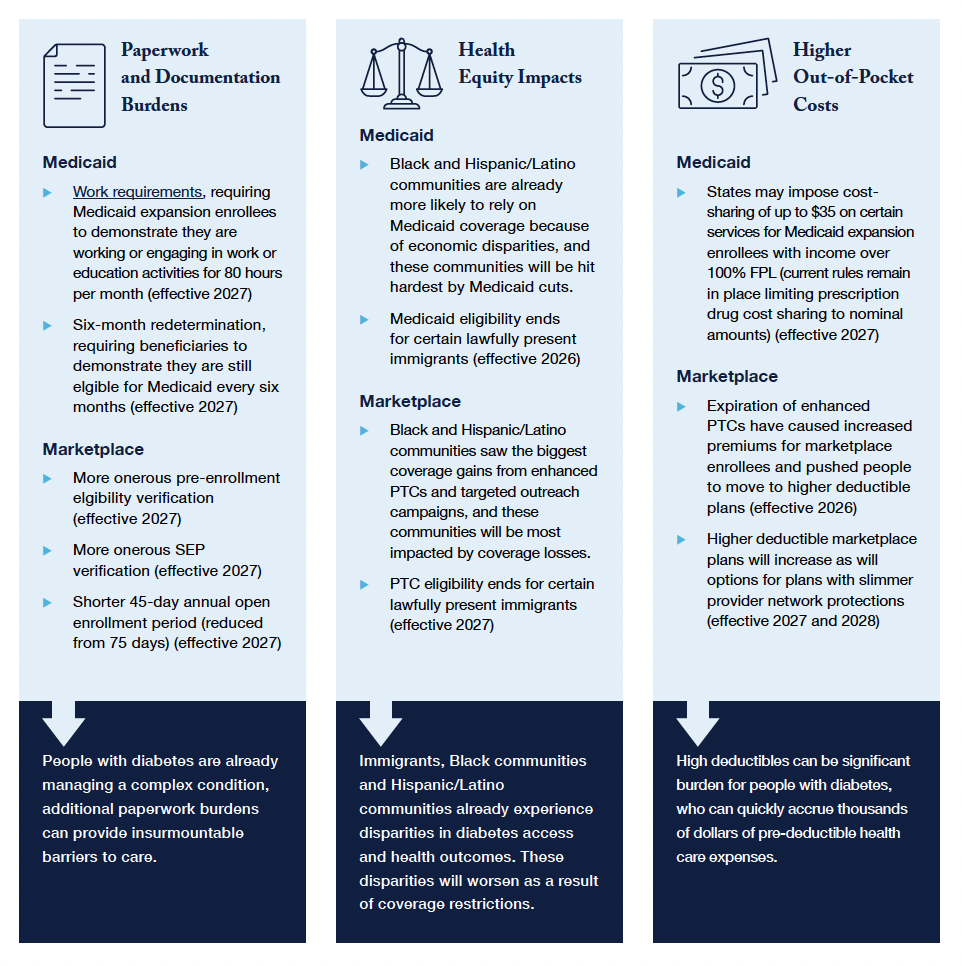
Navigating Coverage Shifts
As the health system prepares for massive Medicaid and marketplace churn over the coming months and years, navigating coverage choices in this environment will become more challenging for people with insulin-requiring diabetes. Policymakers are considering a number of policies to help people with diabetes navigate a more complex coverage environment, including relying on third-party data sources to reduce burden on consumers and funding additional insurance assistance programs.
Addressing Rising Cost Sharing
For people with diabetes, going without coverage is not a choice. The expiration of enhanced PTCs has forced individuals and families to choose coverage options with high deductibles and co-insurance, which stretch household budgets to the breaking point to maintain comprehensive health insurance coverage. Policymakers are considering implementing plan design reforms that reduce cost sharing burden on people with diabetes, including eliminating deductibles or zeroing out all cost sharing for insulin or CGMs.
Preparing the Safety Net to Fill Coverage Gaps
For people with diabetes, ensuring that gaps in insurance coverage do not translate into gaps in access to care and treatment will mean relying on a patchwork of safety-net programs. Many people with diabetes also receive treatment from safety-net providers, including federally qualified community health centers (FQHCs) and disproportionate share hospitals. However, these providers and programs are likely to encounter a growing number of people who are un- or under-insured over the coming months and years, stretching already strained resources. Policymakers are considering a number of options to strengthen the safety net, including requiring hospitals to devote more resources to uninsured and low-income communities.
About
Authors: Amy Killelea and Christine H. Monahan
Published July 2026