Costs and Competition | Center on Health Insurance Reforms
clinician pointing to spreadsheet on computer screen

Costs and Competition

Consumers are struggling to afford their health coverage and care, largely due to rising health care costs. Our team of nationally recognized experts investigates policy solutions to restrain health care cost growth, improve the affordability of health insurance, and promote a high-quality healthcare system that works for consumers and patients.

surgical mask and hundred dollar bills

What We Do

Our experts at CHIR conduct research to assess the impact of federal and state policies to reduce costs and foster healthcare competition on consumers, patients, providers, and payers. We provide unbiased, relevant, and timely information, analysis, and technical assistance to policymakers, regulators, and stakeholders seeking a marketplace where consumers have access to affordable and high quality healthcare coverage.


What's New

Events

Publications

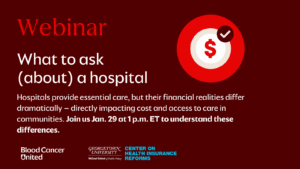
What to Ask (About) a Hospital

Through a collection of fact-sheets on hospital payment streams, various designations, and key sources of information, this guide offers a starting point to understand the organizational and financial differences across hospitals in the United States. This document provides key questions to ask a hospital – about ownership, type of care, location, type of patients, teaching status, and alternative payment – the answers to which can help better understand the regulations under which a hospital operates, the funding streams it may have available, and other factors that influence its business practices and financial status. This document overviews key terms, concepts, and measures related to hospital revenue from three payment types: Medicare, Medicaid, and commercial insurance. This series of fact sheets describe how a hospital’s organization form influences its business and financial operations, eligibility for federal programs, and level of government oversight and public reporting requirements. This series of fact sheets overviews subsection (d) hospitals (“general acute care hospitals”) and Medicare-recognized specialty hospitals, explains how these hospitals are treated under Medicare and 340B, and provides descriptive statistics for each hospital type. This series of fact sheets explain how a hospital’s location influences how and what it gets paid by Medicare, as well as explains how each type of rural hospital is treated under Medicare and 340B, and provides descriptive statistics for each rural hospital type. This series of fact sheets describe how “safety-net hospitals” – Medicare and Medicaid disproportionate share hospitals (DSH) and 340B hospitals – quality and are paid under their respective federal programs, and provides descriptive statistics for each program. This series of fact sheets define graduate medical education and describe U.S. teaching hospitals with key descriptive statistics on institutional characteristics. This series of fact sheets defines the goals of alternative payment models and describes the Medicare Shared Savings Program as well as a range of Centers for Medicare & Medicaid Services Innovation Center models. This document identifies key sources for understanding an individual hospital’s ownership, regulatory and payment classification, and its financial, operational, and quality performance beyond what is covered in the What to Ask (About) a Hospital guide.

Corporatization of Health Care, Costs and Competition, Provider Costs and Billing Reform, Transparency

The Complex Web of Health Care Financial Interests and Their Implications for Ever Higher Spending: An Expert Perspective

Achieving cost containment in healthcare requires an understanding of the complex, often opaque, financial relationships now systemically connecting private insurers, providers, and middlemen businesses, and which are characterized by cost increasing incentives, conflicts of interests, and money flows unrelated to value or quality of care for patients.

Corporatization of Health Care, Costs and Competition