Georgetown’s Center on Health Insurance Reforms (CHIR), with support from the National Institute for Health Care Reform, released an issue brief that provides insights into employers’ and employees’ experiences with Individual Coverage Health Reimbursement Arrangements (ICHRAs), recently rebranded as CHOICE Arrangements.
To help policymakers confront health care affordability challenges, the Georgetown University Center on Health Insurance Reforms (CHIR) has released A 3-Part Strategy for Better Health Insurance: Reducing Costs, Complexity, and Corporate Abuses, a new brief that details actionable federal solutions to reform commercial coverage.
To help policymakers confront health care affordability challenges, the Georgetown University Center on Health Insurance Reforms (CHIR) has released A 3-Part Strategy for Better Health Insurance: Reducing Costs, Complexity, and Corporate Abuses, a new brief that details actionable federal solutions to reform commercial coverage.
Georgetown’s Center on Health Insurance Reforms (CHIR), with funding from Blood Cancer United, released findings from a secret shopper study finding aggressive and misleading marketing of limited benefit health insurance products.
As Congressional inaction on premium tax credit enhancements caused net marketplace premiums to spike in 2026, initial sign-ups declined. Emerging data from state marketplaces show that enrollment has continued to decline, with more dramatic drop-offs once premiums came due.
New Trump administration regulations give unprecedented flexibilities to insurance companies to increase patient cost sharing and sell “non-network” plans where all providers are out-of-network, while imposing new paperwork burdens for consumers that will cause millions to lose coverage.
While several states increased state-funded ACA marketplace subsidies to offset the loss of federal enhanced premium tax credits, state efforts are largely stopgaps that cannot fully or indefinitely protect consumers from premium spikes caused by Congress’s refusal to preserve marketplace affordability.
This explainer describes how health insurance risk pooling works and explains how recent federal policy changes — including Medicaid cuts under H.R. 1, the expiration of enhanced ACA premium tax credits, reduced marketplace enrollment, and regulations lowering the value of coverage — will shrink insurance risk pools, raise premiums, and shift costs onto sicker Americans.
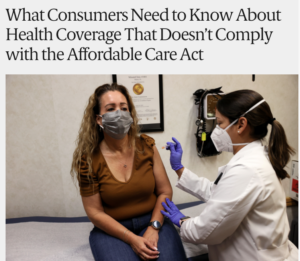
As Trump administration policies and Congressional inaction on enhanced premium tax credits make ACA marketplace coverage harder to access and afford, this publication explains what consumers need to know about the risks of alternative coverage arrangements — including short-term plans, health care sharing ministries, fixed indemnity insurance, and Farm Bureau plans — that lack the ACA's core consumer protections.
In this report, researchers partnered with health actuaries at Wakely Consulting Group (Wakely) to assess the current state of the market for small employer health insurance, the factors driving its decline, and the scope of potential policies to improve coverage affordability for small businesses and their workers.
This article discusses Individual Coverage Health Reimbursement Arrangements (ICHRAs) and explains how new federal policy changes that threaten the stability of the ACA marketplaces undermine ICHRAs as a coverage option for small businesses and their employees.
This article reviews insurer rate filings to show how federal policy changes, including the pending expiration of enhanced premium tax credits, are making ACA marketplace premiums much more expensive.
This article explains how President Trump’s domestic policy law and new regulations are creating red tape and administrative barriers to enrolling in the ACA marketplaces, reducing access to affordable health coverage.
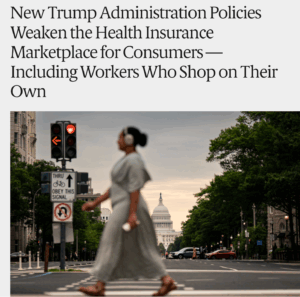
This article explains how new federal policies are making big changes to how the ACA marketplaces operate, imposing costs and burdens on states and consumers in ways that will make coverage harder to access and afford.
This data snapshot reviews 2024 dental coverage in the ACA Marketplaces, highlighting trends in enrollment in pediatric and adult stand-alone dental plans, insurer participation, and premiums across states.
This article analyzes how proposed limits on ACA enrollment periods could reduce sign-ups and destabilize the individual health insurance market risk pool.
This article discusses the Trump administration’s 90 percent funding cut to the organizations that provide outreach, education, and enrollment assistance for people using the federal ACA marketplace, HealthCare.gov.
This article discusses options for reducing broker misconduct and fraud in the ACA marketplaces, including suggestions by conservatives to address broker problems by eliminating the enhanced premium tax credit for consumers.
This article explains how states are establishing “check the box” programs using state tax and unemployment forms to facilitate enrollment in ACA marketplace coverage.
This article examines how state-based ACA marketplaces are using quality measurement and oversight tools to advance health equity and improve consumer outcomes.
This article reviews state strategies to prevent coverage losses as Medicaid eligibility redeterminations resume after the pandemic, focusing on efforts that leverage the ACA marketplaces.
This article discusses data from Colorado that shed light on the operations and finances of health care sharing ministries (HCSMs) and the potential risks to consumers.
This article examines early evidence from Colorado and Washington’s public options, the Colorado Option and CascadeCare, about whether those programs are containing health care costs and premiums.
This article analyzes new limits on short-term plans set by the Biden administration and highlights additional actions states can take to protect consumers.
This article explains how a federal court ruling threatens no-cost preventive care coverage under the ACA and outlines state responses to help preserve access.
This issue brief describes how state-run ACA marketplaces are using flexibility to adopt policies designed to reduce administrative burdens, help consumers navigate health plan options, require or incentivize insurer participation, and reduce health and coverage disparities.
The “family glitch” was a policy that had left about 5 million low-income Americans ineligible for affordable ACA marketplace coverage; this article explains a Biden administration rule addressing this problem.
This article examines legal threats to the federal requirement for insurers to cover high-value preventive services and the policy tools states can use to maintain access.
This report explores the varying approaches states have taken to enforce the consumer protections in the No Surprises Act and explains that the law will depend on effective federal–state partnerships as well as education for consumers and providers.
This article discusses how health insurance reforms can be leveraged to improve access to diabetes care and reduce racial and socioeconomic disparities.
This article explains why better race and ethnicity data collection is critical for state-based marketplaces seeking to advance health equity and improve consumers’ access to care.
This article discusses several policy initiatives from Covered California, including programs that eliminate nominal premiums and facilitate marketplace enrollment for people transitioning from California Medicaid, Medi-Cal.
This article reviews developments from Colorado, Washington, and Nevada as these states work to establish public option–style programs aimed at lowering health care costs.
This article discusses proposed rules by the Biden administration that would restore federal oversight of ACA marketplace plans’ provider networks and establish network adequacy standards.
This issue brief presents findings from a survey of state-based ACA marketplaces regarding advertising, outreach and enrollment strategies for open enrollment.